
The Tempest: study cards (PDF)
PDF, 12 pages, 975 KB. Free, no sign-up, made to be printed.
Also for The Tempest: the study guide and the quotation sheet (PDF).
How to use the cards
Each card has one quotation from The Tempest on the front. Say who speaks it, where it comes in the play, and what it means, then turn the card to check. Mark the ones you know and the deck will skip them next time on this device; keep turning the rest until they stick.
Every card comes from the study guide and the quotes-by-theme pages, so each one links back to the full analysis. On paper, print the PDF, cut along the dashed lines and fold each strip down the middle.
The cards
-
Card 1 of 39
What cares these roarers for the name of king? To cabin! Silence! Trouble us not.
Who says it, when, and what does it mean?
Card 1 of 39
Boatswain · Act 1, Scene 1
What do these roaring waves care about the title of king? Go to your cabins. Be quiet. Stop bothering us.
In an essay: Use it as the play’s opening statement of the theme: authority is real only where it can be enforced.
Quotes about power and colonialism
-
Card 2 of 39
Me, poor man, my library
Was dukedom large enough.Who says it, when, and what does it mean?
Card 2 of 39
Prospero · Act 1, Scene 2
In my brother’s view, my books were all the kingdom I needed.
-
Card 3 of 39
Hell is empty,
And all the devils are here.Who says it, when, and what does it mean?
Card 3 of 39
Ferdinand, reported by Ariel · Act 1, Scene 2
The devils have all left hell and come to this ship.
-
Card 4 of 39
This island’s mine by Sycorax, my mother,
Which thou tak’st from me.Who says it, when, and what does it mean?
Card 4 of 39
Caliban · Act 1, Scene 2
I inherited this island from my mother, and you have stolen it.
-
Card 5 of 39
You taught me language, and my profit on ’t
Is I know how to curse.Who says it, when, and what does it mean?
Card 5 of 39
Caliban · Act 1, Scene 2
You taught me to speak, and all I gained is the ability to curse you.
-
Card 6 of 39
Nothing of him that doth fade
But doth suffer a sea change
Into something rich and strange.Who says it, when, and what does it mean?
Card 6 of 39
Ariel · Act 1, Scene 2
Everything in him that would decay is being transformed by the sea into something precious and wonderful.
-
Card 7 of 39
If thou more murmur’st, I will rend an oak
And peg thee in his knotty entrails till
Thou hast howled away twelve winters.Who says it, when, and what does it mean?
Card 7 of 39
Prospero · Act 1, Scene 2
If you complain again, I will split an oak tree and fasten you inside its knotted trunk until you have howled there for twelve years.
In an essay: Use it to show that Prospero rules even his willing servant by debt and fear, which weakens any neat contrast between his art and Sycorax’s. The page on magic and illusion takes this further.
Quotes about power and colonialism
-
Card 8 of 39
For I am all the subjects that you have,
Which first was mine own king; and here you sty me
In this hard rock, whiles you do keep from me
The rest o’ th’ island.Who says it, when, and what does it mean?
Card 8 of 39
Caliban · Act 1, Scene 2
I am the only subject you have, and I used to be my own king. Now you pen me up in this rock like a pig and keep the rest of the island from me.
In an essay: This is the strongest evidence that the play lets the dispossessed speak. Note the sequence: welcome, shared knowledge, confinement. It is a colonial encounter told by the person who lost.
Quotes about power and colonialism
-
Card 9 of 39
When thou didst not, savage,
Know thine own meaning, but wouldst gabble like
A thing most brutish, I endowed thy purposes
With words that made them known.Who says it, when, and what does it mean?
Card 9 of 39
Miranda · Act 1, Scene 2
When you, a savage, did not even know what you meant, and babbled like an animal, I gave you words to express your intentions.
In an essay: Use it for the colonial belief that teaching one’s own language is a kindness. Be fair to the complication: Miranda’s anger has a cause, and the play does not excuse the attack.
Quotes about power and colonialism
-
Card 10 of 39
My brother and thy uncle, called Antonio -
I pray thee, mark me - that a brother should
Be so perfidious! - he whom next thyself
Of all the world I lovedWho says it, when, and what does it mean?
Card 10 of 39
Prospero · Act 1, Scene 2
My brother, your uncle Antonio (listen to me), that a brother could be so treacherous, the man I loved most in the world after you.
In an essay: Use it as the starting point of the arc. Forgiveness in Act 5 only means something if you have shown how raw the wound still is in Act 1.
Quotes about forgiveness
-
Card 11 of 39
If by your art, my dearest father, you have
Put the wild waters in this roar, allay them.Who says it, when, and what does it mean?
Card 11 of 39
Miranda · Act 1, Scene 2
Dearest father, if you have used your magic to make the sea rage like this, calm it.
In an essay: Use it to argue that the play links magic with theatre from its opening minutes. The first illusion is practised on the audience.
Quotes about magic and illusion
-
Card 12 of 39
I boarded the King’s ship; now on the beak,
Now in the waist, the deck, in every cabin,
I flamed amazement.Who says it, when, and what does it mean?
Card 12 of 39
Ariel · Act 1, Scene 2
I boarded the King’s ship. Now at the prow, now amidships, on the deck, in every cabin, I blazed and struck them with terror and wonder.
In an essay: Use it to define the magic precisely: it works on perception, not on matter. The disaster was complete as an experience and harmless as a fact.
Quotes about magic and illusion
-
Card 13 of 39
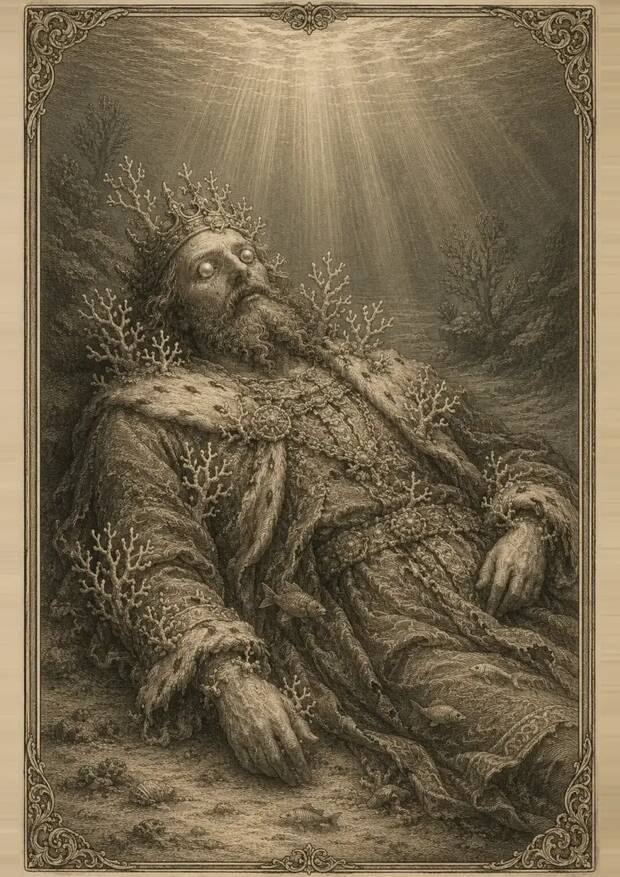
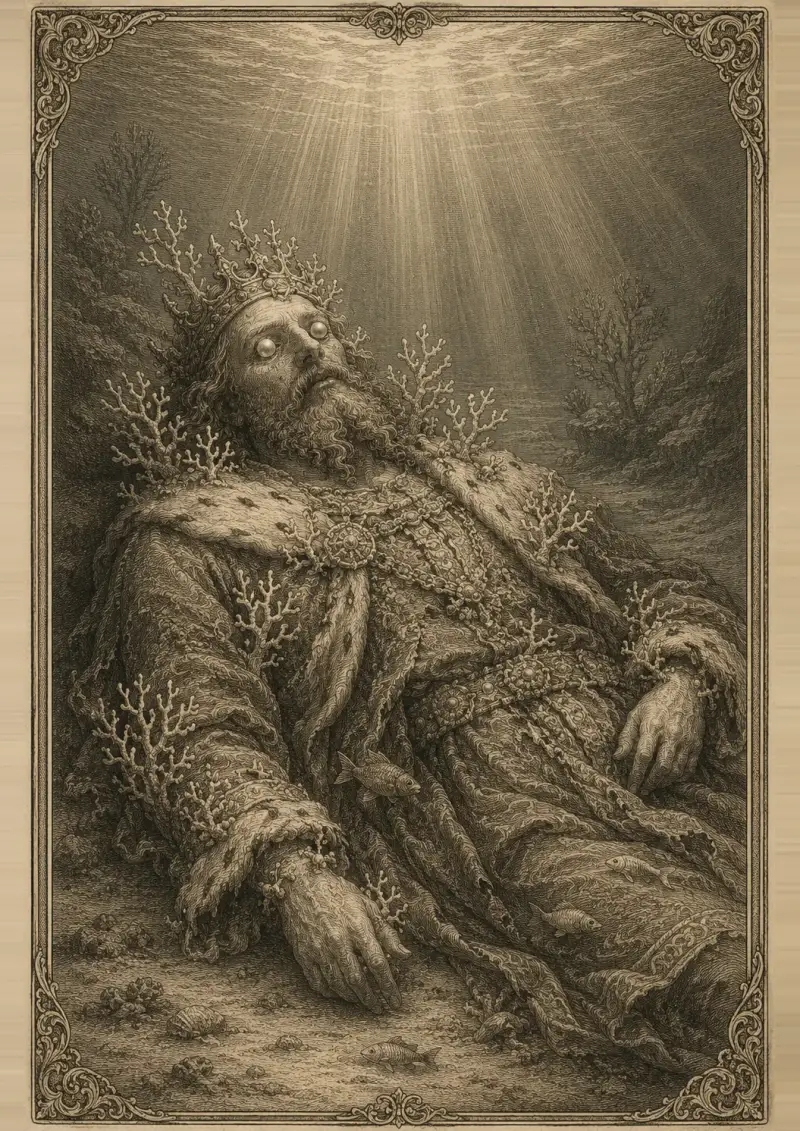
Full fathom five thy father lies.
Of his bones are coral made.
Those are pearls that were his eyes.Who says it, when, and what does it mean?
Card 13 of 39
Ariel · Act 1, Scene 2
Your father lies thirty feet under the sea. His bones have turned to coral, and his eyes are now pearls.
In an essay: Use it to show illusion as a kindly deception. Then add that it comes true in another sense, since Alonso will be changed by what the sea does to him.
Quotes about magic and illusion
-
Card 14 of 39
GONZALO No occupation; all men idle, all,
And women too, but innocent and pure;
No sovereignty -Who says it, when, and what does it mean?
Card 14 of 39
Gonzalo and Sebastian · Act 2, Scene 1
Gonzalo: Nobody would work; all the men would be at leisure, and the women too, but innocent and pure. There would be no ruler. Sebastian: And yet he wants to be king of it.
In an essay: Use it to show that even the kindest European sees the island as empty land to be organised. Nobody in the scene asks whether anyone lives there.
Quotes about power and colonialism
-
Card 15 of 39
And look how well my garments sit upon me,
Much feater than before. My brother’s servants
Were then my fellows; now they are my men.Who says it, when, and what does it mean?
Card 15 of 39
Antonio · Act 2, Scene 1
See how well my robes suit me, much more neatly than before. My brother’s servants used to be my equals; now they serve me.
In an essay: Use it to argue that usurpation in this play is a habit, not a single crime. Then ask the awkward question: Prospero also made the island’s first inhabitant his servant.
Quotes about power and colonialism
-
Card 16 of 39
Ay, sir, where lies that? If ’twere a kibe,
’Twould put me to my slipper, but I feel not
This deity in my bosom.Who says it, when, and what does it mean?
Card 16 of 39
Antonio · Act 2, Scene 1
Conscience? Where is that? If it were a sore on my heel it would make me wear a slipper, but I feel no such god in my chest.
In an essay: Use it to set up the problem Act 5 cannot solve. Pardon that waits for repentance will wait for ever with Antonio. Pair it with his silence when he is forgiven.
Quotes about forgiveness
-
Card 17 of 39
Th’ occasion speaks thee, and
My strong imagination sees a crown
Dropping upon thy head.Who says it, when, and what does it mean?
Card 17 of 39
Antonio · Act 2, Scene 1
The opportunity is calling you, and in my vivid imagination I see a crown falling onto your head.
In an essay: A quotation that complicates the theme. The most dangerous illusion in the play is made without a spell. Compare Caliban’s dream of riches
Ready to drop upon me
, which uses the same image innocently.Quotes about magic and illusion
-
Card 18 of 39
I’ll show thee the best springs. I’ll pluck thee berries.
I’ll fish for thee and get thee wood enough.
A plague upon the tyrant that I serve.
I’ll bear him no more sticks, but follow thee,
Thou wondrous man.Who says it, when, and what does it mean?
Card 18 of 39
Caliban · Act 2, Scene 2
I will show you the best springs, pick you berries, fish for you and fetch your wood. Curse the tyrant I serve. I will carry no more sticks for him but follow you, you marvellous man.
In an essay: Use it to show a colonised mind: Caliban can imagine changing masters but not having none.
Quotes about power and colonialism
-
Card 19 of 39
For every trifle are they set upon me,
Sometimes like apes, that mow and chatter at me
And after bite meWho says it, when, and what does it mean?
Card 19 of 39
Caliban · Act 2, Scene 2
For the smallest fault they are sent to attack me, sometimes in the shape of apes that pull faces and chatter at me and then bite me.
In an essay: Use it against any reading of Prospero’s art as purely benign. The same power that stages a wedding entertainment keeps a slave in fear.
Quotes about magic and illusion
-
Card 20 of 39
Be not afeard. The isle is full of noises,
Sounds and sweet airs that give delight and hurt not.Who says it, when, and what does it mean?
Card 20 of 39
Caliban · Act 3, Scene 2
Do not be frightened. The island is full of sounds and sweet music that please and do no harm.
-
Card 21 of 39
Remember
First to possess his books, for without them
He’s but a sot, as I am, nor hath not
One spirit to command. They all do hate him
As rootedly as I.Who says it, when, and what does it mean?
Card 21 of 39
Caliban · Act 3, Scene 2
Remember to seize his books first. Without them he is only a fool like me, with not one spirit at his command. They all hate him as deeply as I do.
In an essay: Use it to argue that Prospero’s rule depends on a technology, not on consent or birth. In Milan he was
rapt in secret studies
and lost his state: the same books cost him one kingdom and won him another.Quotes about power and colonialism
-
Card 22 of 39
and then, in dreaming,
The clouds methought would open, and show riches
Ready to drop upon me, that when I waked
I cried to dream again.Who says it, when, and what does it mean?
Card 22 of 39
Caliban · Act 3, Scene 2
And then, in my dreams, I thought the clouds would open and show treasures about to fall on me, so that when I woke I wept to dream again.
In an essay: Use it to show that illusion in this play can be a mercy and a deprivation at once. The character with least power feels the island’s beauty most.
Quotes about magic and illusion
-
Card 23 of 39
whose wraths to guard you from -
Which here, in this most desolate isle, else falls
Upon your heads - is nothing but heart’s sorrow
And a clear life ensuing.Who says it, when, and what does it mean?
Card 23 of 39
Ariel · Act 3, Scene 3
The only thing that can protect you from the anger of the powers, which will otherwise fall on you here on this desolate island, is sincere sorrow and a blameless life from now on.
In an essay: These are the terms of pardon, so measure Act 5 against them. Alonso responds at once, hearing the thunder
bass my trespass
. Sebastian and Antonio draw swords.Quotes about forgiveness
-
Card 24 of 39
We are such stuff
As dreams are made on, and our little life
Is rounded with a sleep.Who says it, when, and what does it mean?
Card 24 of 39
Prospero · Act 4, Scene 1
We are made of the same material as dreams, and our short lives are surrounded, and ended, by sleep.
-
Card 25 of 39
A devil, a born devil, on whose nature
Nurture can never stick; on whom my pains,
Humanely taken, all, all lost, quite lostWho says it, when, and what does it mean?
Card 25 of 39
Prospero · Act 4, Scene 1
He is a devil by birth. No upbringing can change his nature, and all the trouble I kindly took over him has been completely wasted.
In an essay: Treat this as the master’s verdict, not the play’s. In the same scene Caliban alone sees that the stolen clothes are
but trash
, and in Act 5 he is the one plotter who says he has learned.Quotes about power and colonialism
-
Card 26 of 39
Let them be hunted soundly. At this hour
Lies at my mercy all mine enemies.
Shortly shall all my labors end, and thou
Shalt have the air at freedom.Who says it, when, and what does it mean?
Card 26 of 39
Prospero · Act 4, Scene 1
Let them be thoroughly hunted. At this moment all my enemies are at my mercy. Soon all my work will be over, and you shall be as free as the air.
In an essay: Use it to prove that forgiveness was not a foregone conclusion. They are
mine enemies
here; in Act 5 he will sayWelcome, my friends all
.Quotes about forgiveness
-
Card 27 of 39
Our revels now are ended. These our actors,
As I foretold you, were all spirits and
Are melted into air, into thin airWho says it, when, and what does it mean?
Card 27 of 39
Prospero · Act 4, Scene 1
Our entertainment is over. These actors of ours, as I told you, were all spirits, and they have melted into air, into thin air.
In an essay: Use it for the fragility of illusion and the unease of its maker. Our essay on “We are such stuff as dreams are made on” reads the whole speech closely.
Quotes about magic and illusion
-
Card 28 of 39
The rarer action is
In virtue than in vengeance.Who says it, when, and what does it mean?
Card 28 of 39
Prospero · Act 5, Scene 1
It is a finer and less common thing to act well than to take revenge.
-
Card 29 of 39
MIRANDA O, brave new world
That has such people in ’t!Who says it, when, and what does it mean?
Card 29 of 39
Act 5, Scene 1
Miranda: What a splendid new world, with such people in it. Prospero: It is only new to you.
-
Card 30 of 39
This thing of darkness I
Acknowledge mine.Who says it, when, and what does it mean?
Card 30 of 39
Prospero · Act 5, Scene 1
This dark creature, I admit, belongs to me.
In an essay: Use it to show that the ending does not settle the colonial question. Prospero leaves for Milan, but the play never says who gets the island.
Quotes about power and colonialism
-
Card 31 of 39
ARIEL That if you now beheld them, your affections
Would become tender.Who says it, when, and what does it mean?
Card 31 of 39
Ariel and Prospero · Act 5, Scene 1
Ariel: If you saw them now, your feelings would soften. Prospero: Do you think so, spirit? Ariel: Mine would, sir, if I were human. Prospero: Then mine shall.
In an essay: This is the hinge of the play. Use it to argue that Prospero’s mercy is learned in the moment, and shamed out of him, not a plan he held all along.
Quotes about forgiveness
-
Card 32 of 39
The rarer action is
In virtue than in vengeance. They being penitent,
The sole drift of my purpose doth extend
Not a frown further.Who says it, when, and what does it mean?
Card 32 of 39
Prospero · Act 5, Scene 1
It is a finer and less common thing to act well than to take revenge. Since they are sorry, my purpose goes no further, not even by a frown.
In an essay: Quote the conditional clause, which most students omit. It lets you argue that Prospero forgives on a premise the play then shows to be partly false.
Quotes about forgiveness
-
Card 33 of 39
For you, most wicked sir, whom to call brother
Would even infect my mouth, I do forgive
Thy rankest fault, all of them, and require
My dukedom of thee, which perforce I know
Thou must restore.Who says it, when, and what does it mean?
Card 33 of 39
Prospero · Act 5, Scene 1
As for you, most wicked sir, whom I cannot call brother without fouling my mouth, I forgive your worst offence, all of them, and I demand my dukedom from you, which I know you have no choice but to return.
In an essay: The central evidence for the view that this pardon is an exercise of power. Balance it: Prospero could have destroyed Antonio and does not. For another speech in which mercy is argued for from a position of strength, see our essay on “The quality of mercy”.
Quotes about forgiveness
-
Card 34 of 39
ALONSO But, O, how oddly will it sound that I
Must ask my child forgiveness!Who says it, when, and what does it mean?
Card 34 of 39
Alonso and Prospero · Act 5, Scene 1
Alonso: How strange it will sound for me to ask my own child’s forgiveness. Prospero: Stop there, sir. Let us not weigh down our memories with a sorrow that is over.
In an essay: This is what completed forgiveness looks like, because Alonso asks for it. Then question
that’s gone
: the unrepentant Antonio is standing a few feet away.Quotes about forgiveness
-
Card 35 of 39
PROSPERO As you look
To have my pardon, trim it handsomely.Who says it, when, and what does it mean?
Card 35 of 39
Prospero and Caliban · Act 5, Scene 1
Prospero: If you hope for my pardon, tidy the cell well. Caliban: Yes, I will, and from now on I will be wiser and try to earn favour.
In an essay: Use it to complicate the ending. The so-called born devil is the one plotter who says he has changed. Whether that is growth or fear of pinching is open, and you should say so.
Quotes about forgiveness
-
Card 36 of 39
graves at my command
Have waked their sleepers, oped, and let ’em forth
By my so potent art. But this rough magic
I here abjureWho says it, when, and what does it mean?
Card 36 of 39
Prospero · Act 5, Scene 1
At my command graves have woken their dead, opened and let them out, through my powerful art. But I here renounce this rough magic.
In an essay: Ask why he gives it up. One answer: he can only forgive and govern as a man among men. Note that the renunciation is in the future tense. He asks for
Some heavenly music
first, one last charm.Quotes about magic and illusion
-
Card 37 of 39
If this prove
A vision of the island, one dear son
Shall I twice lose.Who says it, when, and what does it mean?
Card 37 of 39
Alonso · Act 5, Scene 1
If this turns out to be one of the island’s illusions, I shall lose my dear son a second time.
In an essay: Use it to argue that illusion leaves damage even when it is kindly meant. Having been deceived for their good, the courtiers can no longer tell wonder from trickery.
Quotes about magic and illusion
-
Card 38 of 39
As you from crimes would pardoned be,
Let your indulgence set me free.Who says it, when, and what does it mean?
Card 38 of 39
Prospero · Epilogue
Just as you would wish your own sins to be forgiven, let your kindness release me.
In an essay: Use it to close the argument. The forgiver ends by needing forgiveness, which turns mercy from one ruler’s gift into a need that everyone shares.
Quotes about forgiveness
-
Card 39 of 39
Now my charms are all o’erthrown,
And what strength I have ’s mine own,
Which is most faint.Who says it, when, and what does it mean?
Card 39 of 39
Prospero · Epilogue
Now all my spells are finished, and the only strength I have is my own, which is very weak.
In an essay: Use it to finish the argument that magic stands for theatre. An illusion needs the consent of those who watch it, and the play ends by asking for that consent.
Quotes about magic and illusion
Next steps
When the deck is easy, write with it: take three cards and turn them into a paragraph with the essay planner, or test yourself on the quotation sheet and the questions and answers. For one passage a day without trying, Daily Bard puts a quotation and its plain-English reading on your phone each morning.

A page of Shakespeare, every day.
This resource comes from Daily Bard, an app for iPhone and iPad. Each morning it shows one engraved plate and one passage, exactly as Shakespeare wrote it, with a plain-English reading on the back of the leaf.
Free to download. The Full Edition is a one-time US$11.99: no subscription, no account, no ads, no tracking.
Get it on the App Store: apps.apple.com/app/id6792967225
More free study guides, lesson plans and close readings: dailybard.app